

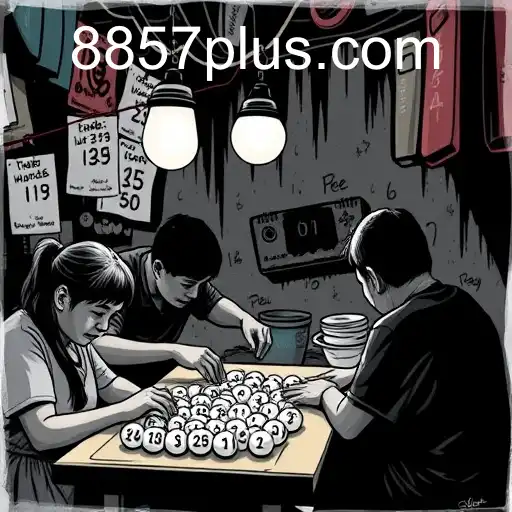

Jueteng is a subterranean lottery game that has been interwoven into the fabric of Filipino life for generations. Its allure and persistence demonstrate the human desire for fortune against the odds of life, as well as the socio-economic dynamics in the Philippines. Despite being illegal, jueteng thrives, revealing a complex interplay between grassroots economics, corruption, and cultural tradition.55R
Jueteng operates similarly to a typical lottery but with its own unique twist reflective of the local culture. Participants select a set of numbers from a predefined range, typically 1 to 37. The winning numbers are then drawn using bolitas, small balls with numbers, in a ceremony that involves less official but decidedly traditional methods compared to state-run lotteries.HJTT6
The key to jueteng's sustained popularity lies in its accessibility and the promise of quick financial gain. Unlike national lotteries that have higher stakes and require formal tickets, jueteng allows players to place bets as low as one peso, making it accessible even to economically disadvantaged participants. This simplicity and accessibility make it an attractive option for many Filipinos seeking to improve their financial situations.
Jueteng is more than just a game; it is a social phenomenon deeply embedded in the socio-economic structures of Philippine society. It serves both as a source of income for those involved in its operation and as a financial hope for those playing the game. At its core, jueteng offers an informal economic system that sustains a network of cabos (bet collectors), kubradors (bettors), and cobradores (bookkeepers), each earning a livelihood from the game.7BRWIN
However, this underground economy comes at a cost. Policymakers and social critics argue that jueteng perpetuates poverty by encouraging gambling addiction, which disproportionately affects those with the least to spare. Additionally, the game operates under a veil of secrecy, enabling corruption and bribery within law enforcement and local governance. Authorities and public enterprises face credibility issues, as many are allegedly involved in shielding jueteng operations for personal gain.BR336
Historically, the roots of jueteng are believed to trace back to Chinese immigrants during the Spanish colonial period. Over time, the game adapted to the local environs, shaping and reshaping itself to fit the cultural milieu of the Philippines. This deep historical significance reinforces its persistence despite legal barriers.
Jueteng's embeddedness in culture is manifested in how it is interlaced with various social activities and beliefs. For some, the lottery numbers hold mystical significance, often interpreted through dreams, or everyday experiences, hinting at the talismanic properties ascribed to the game. The human element of luck, along with local superstitions, plays a significant role in the sustained allure of jueteng.
Throughout the years, various administrations have attempted to eradicate jueteng, citing its social and economic repercussions. However, these initiatives often face significant challenges. The deeply ingrained nature of jueteng in Philippine society makes enforcement difficult, as seen in the incentivized participation from multiple societal layers, ranging from local politicians to community leaders.
Some argue that legalizing jueteng might mitigate its adverse effects, citing potential revenues that could be funnelled into national infrastructure and social services. Legalization could also curtail corruption by bringing operations into the legal framework, enabling regulatory oversight and transparency.
In the digital age, the dynamics of jueteng could evolve with advancements in technology. Mobile devices and internet connectivity have the potential to revolutionize the way numbers are chosen and bets are placed. While this shift could further democratize access, it also presents new challenges in regulation and law enforcement.
The convergence of technology with traditional practices has the potential to redefine jueteng for a new generation, exposing it to larger audiences while exacerbating the societal challenges associated with gambling.
In conclusion, jueteng persists as a multifaceted issue in the Philippines, balancing between cultural tradition, economic necessity, and legal complexity. It exemplifies the intricate weave of socio-political and cultural factors that continue to define its presence in Filipino life, despite decades of attempts to root it out.
313boi
Dive into the world of EpicLegends, a captivating game that blends cutting-edge gameplay with thrilling events, drawing players into a realm where legends are born.

Dive into FruityWheel, a captivating and refreshing game offering an immersive experience through its unique blend of vibrant visuals and engaging rules.
Dive into the captivating world of GaneshaFortune, a game that combines traditional elements with modern gaming mechanics to offer an enthralling experience. Discover its rules, features, and the cultural significance interwoven into its design.

Explore the captivating realm of HacivatandKaragoz, a game that blends traditional storytelling with contemporary gameplay. Learn about its origins, fundamental rules, and how it reflects current events.

Dive into the eerie world of CrazyHalloween, a game that blends captivating gameplay with the chilling atmosphere of Halloween night.

Explore the exciting world of JumpHigherMobile, its gameplay, rules, and how it ties into current events with its unique code 8857.
